Positive Solutions Divorce Services

Positive Solutions Divorce Services
Menu
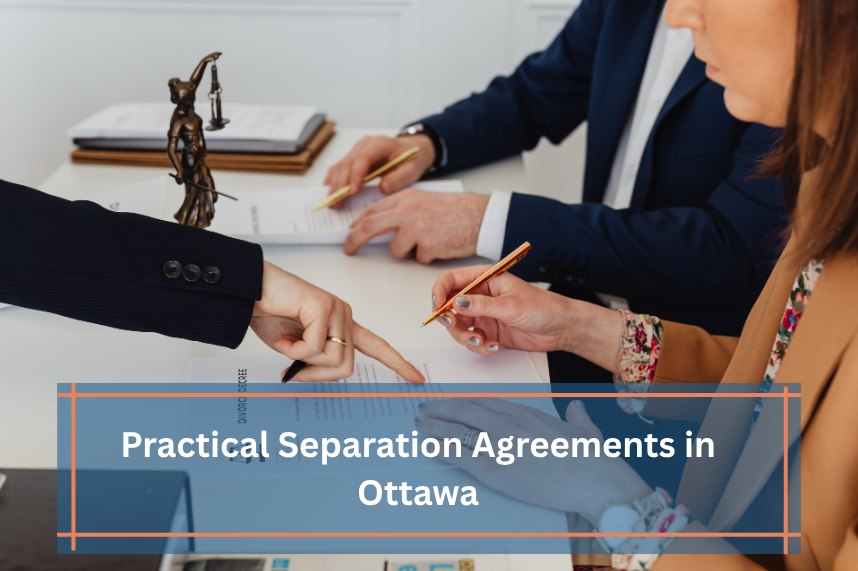
When going through a separation or divorce, couples often assume hiring individual lawyers is their only option for resolving issues such as property division, along with the matrimonial home and other shared assets.
However, this traditional approach frequently leads to prolonged proceedings, escalating costs, and increased emotional stress. Mediation offers a more efficient alternative, helping couples reach fair agreements without the delays inherent in the conventional legal system. Understanding the key differences between these approaches can help couples make informed decisions about their separation process.
The traditional legal approach involves each spouse hiring separate family law lawyers who communicate through formal letters, motions, and court appearances. This adversarial system often creates unnecessary conflict and significant delays. Lawyers’ busy schedules, court backlogs, and the billing structure of legal firms can extend separations for years rather than months.
Each lawyer operates independently, representing their client’s interests, which often leads to a breakdown in direct communication between spouses. Simple decisions that could be made in a single conversation between spouses end up requiring multiple letters, phone calls, and billable hours between lawyers. This disconnect not only prolongs the process but can also create new conflicts and misunderstandings.
Several factors contribute to lengthy traditional separations:
Traditional legal proceedings operate on billable hours, meaning lawyers charge for every phone call, email, letter, and court appearance. With legal fees ranging from $300-$600 or more per hour, prolonged proceedings can quickly deplete family resources. A two-year separation through traditional legal channels can easily cost each spouse $50,000 to $150,000 or more, funds that could be better used to purchase a new home or to send their
children to university.
These costs often escalate due to:
Mediation in cities like Ottawa and across Ontario takes a fundamentally different approach to resolving divorce disputes. Instead of two lawyers managing negotiations through formal legal channels, a single mediator works directly with both spouses. Family mediation utilizes this direct communication to dramatically reduce delays and misunderstandings, offering an alternative to hiring a family lawyer. Mediators focus on facilitating direct dialogue between spouses, identifying common ground, developing practical solutions, and moving efficiently toward agreement.
How Family Mediators Keep Agreements Moving Forward
Professional mediators bring specific skills and techniques that expedite the separation process:
While traditional legal separations and divorce often take 2-3 years, mediated agreements typically conclude within 1-3 months. This dramatic difference stems from the streamlined nature of mediation compared to the lengthy traditional process.
Mediation Process Timeline:
Note: Most of these timeframes are client driven. Mediators work with the parties to streamline this process.
Why Mediation is the More Affordable Choice
While lawyers typically require substantial retainers ($5,000-$15,000 per person) and charge for every interaction, mediators often work on a flat-fee or per-session basis. A complete mediated Agreement usually costs less than $4,500 per person, a fraction of the cost of legal fees.
This cost efficiency comes from:
Initial Consultation (No charge)
Positive Solutions offers a free, 30-minute, joint consultation where both parties meet with an experienced member of our Ottawa, Ontario-based mediation team. This initial meeting serves as an introduction to our services and allows us to understand the party’s unique situation. We believe in transparency and ensuring our clients have all the information needed to make informed decisions about the separation and divorce process.
Private Individual Meetings
The individual meeting is a mandatory 60-minute private session between each party and their mediator. This confidential meeting provides a safe space for our clients to openly discuss their concerns, ask questions, and share their priorities without the presence of their spouse. The mediator will carefully assess the situation to ensure divorce mediation is appropriate for the couple to proceed and help them understand what documentation will be needed to prepare for discussions in the joint meetings.
Structured Joint Mediation Sessions
The mediator guides couples through a systematic process while creating comprehensive documentation at each stage. This structured approach ensures all aspects of the separation are properly addressed and documented, providing the parties with concrete proposals rather than abstract discussions. Documents that are drafted during the mediation process are as follows:
The mediator begins by gathering complete financial disclosure from both parties, a crucial first step in the separation process, especially in Ottawa, Ontario where specific provincial laws may apply. Clients provide detailed information about all assets, including, but not limited to the matrimonial home, which is crucial during divorce proceedings:
The mediator compiles this information into a comprehensive financial report, presenting a clear picture of the family’s complete financial situation and assessing the need for financial support. They develop multiple scenarios for achieving equitable distribution, considering factors such as tax implications, timing of transfers, and practical implementation challenges. This helps couples understand their options and make informed decisions about property division.
Mediators generate child and spousal support calculations based on the Federal Child Support Guidelines (FCSG) and the Spousal Support Advisory Guidelines (SSAG). These calculations include detailed income analyses for both parties and explore various tax implications. The mediator prepares comprehensive reports showing different support options including provisions for children’s special expenses and cost-sharing arrangements.
Creating a workable parenting plan requires careful attention to detail and consideration of the family’s unique circumstances within the framework of family law. Through discussion with the parties, Mediators develop a comprehensive parenting plan that address regular parenting time, holidays, and special occasions as well as a decision-making framework for important aspects of their children’s lives. These plans can also extend beyond basic schedules to include detailed protocols for parent communication, specific procedures for resolving future parenting disputes and much more. The goal is to create a thorough document that provides clarity and stability for both parents and children.
A separation agreement is a legally binding document that outlines the terms of the separation. These documents incorporate all terms of the separation that were discussed and agreed upon during mediation, while ensuring compliance with legal requirements. The agreement will include clear rationales for any deviations from standard guidelines, ensuring the agreement will withstand legal scrutiny while reflecting the couple’s specific circumstances and intentions.
The Concluding Session is the final step after the completion of a Separation Agreement, providing clients in Ottawa and Ontario with guidance on implementing their agreement effectively. This session includes instructions for essential tasks such as filing the agreement with the court, notifying the CRA of marital status changes, pension credit splits, and support payment arrangements. It also reviews detailed time frames for asset transfers, insurance updates, and beneficiary changes to ensure all practical aspects are properly addressed and documented. By offering a clear implementation plan, the session helps reduce the likelihood of future conflicts or misunderstandings and prepares clients for life after separation.
Throughout this systematic process, mediators maintain an active role in document preparation and calculations, presenting drafts and revisions for discussion and refinement. This approach combines the efficiency of mediation with the thoroughness of proper legal documentation, ensuring all aspects of the separation are properly addressed. The mediator’s expertise in preparing these essential documents helps couples move through the separation process more quickly and cost-effectively compared to traditional legal channels, while still ensuring all necessary legal and practical considerations are properly documented and addressed.
The preparation and revision of these documents, including the separation agreement, often occurs between sessions, allowing couples to review proposals and consider implications before making decisions. This thoughtful approach helps maintain the efficiency of the mediation process while ensuring all decisions are well-informed and carefully documented. The result is a comprehensive set of separation documents that not only meets legal requirements but also provides clear guidance for the couple’s future interactions and responsibilities.
Once couples reach agreement through mediation, it is recommended that each party obtain independent legal advice (ILA) to ensure their legal rights are protected. This ensures protection of rights while maintaining the efficiency of the mediation process. The final agreement carries the same legal weight as one reached through traditional litigation but is achieved in a fraction of the time for a fraction of the cost.
Understanding how separation agreements work can help couples make informed decisions before starting mediation.
The Wilson Separation
The Wilsons initially hired lawyers and spent eight months waiting for court dates and exchanging hostile correspondence. After switching to mediation, they completed their separation agreement in just ten weeks, saving over $60,000 in combined legal fees. Their experience highlighted how the traditional legal system’s adversarial nature often
escalates conflict while mediation promotes cooperation.
The Brown Family
Jeff and Laura Brown chose mediation specifically to avoid the adversarial court system. Their mediator helped them develop a comprehensive parenting plan and financial settlement in two months through family mediation. They were able to maintain a good co-parenting relationship which allowed them to focus on the children and support their well being.
We proudly serve families across Ottawa and surrounding areas including:
👉 Schedule your free 30-minute joint consultation today to learn how divorce mediation in Ottawa can support you in reaching clear, practical agreements that work for both of you.
📞 Toll-Free: 888-779-8777
📧 connect@positivesolutions.ca
🌐 www.positivesolutions.ca
“Changing the way couples separate in Ottawa Ontario”

President and founder of Positive Solutions Divorce Services®
(416)-559-5527 | connect@positivesolutions.ca | positivesolutions.ca
The information provided in our blogs and throughout our website is intended for general educational purposes, offering insights into separation and divorce processes in Ottawa and throughout Ontario. While we make every effort to ensure our content is accurate and current, it should not be considered legal advice. Although we can provide legal information to help you understand the divorce process, we recommend consulting with a qualified family law lawyer to obtain legal advice specific to your situation.
Learn More about Positive Solutions Divorce Services
Book a Free Joint Online Meeting to see if Mediation is right for you.


If a parent fails to comply with the agreed-upon plan, the other parent can seek enforcement through family court or return to mediation to resolve the conflict.

Throughout the mediation process, we encourage open communication and creative problem-solving, often uncovering mutually beneficial solutions. Our goal is to help you create a separation agreement that provides clarity and stability during this transitional period, while also being flexible enough to adapt to future changes.
By choosing our mediation services for your separation agreement, you can often achieve a more personalized and comprehensive document than one created through traditional legal channels, potentially saving time, reducing costs, and laying the groundwork for a more amicable post-separation relationship.
A Separation Agreement is a legally binding document that outlines how separating spouses will divide parenting responsibilities, property, and finances after a relationship ends. At Positive Solutions Divorce Services®, we help couples create clear, enforceable Separation Agreements through mediation—without going to court.
Our trained mediators guide both partners through every topic that matters: parenting time, decision making, child support, spousal support, and property equalization. We offer a calm, structured environment where couples can resolve issues respectfully and affordably. Once decisions are made, we prepare a comprehensive agreement that can be reviewed by independent legal counsel and signed to become legally binding in Ontario.
*The information included in a Separation Agreement, or other applicable documents, is purely a guide and cannot substitute for a lawyer’s skill, knowledge, and careful drafting. These documents are simply reflective of the information received from you and are an administrative service only.
Positive Solutions Divorce Services® does not warrant and is not liable or responsible for ensuring the validity and/or enforceability of any Agreement or clause in an Agreement and remains your full and sole responsibility. Full financial disclosure is a crucial element in the preparation of any Agreement. It is also critical that you understand your rights and obligations under existing law.
In many circumstances, the Agreement will be addressing complex assets and issues, such as corporations, trusts, pensions, tax implications etc. In these cases, it is imperative that the actual relevant documentation be reviewed and that the expertise of an accountant or specialist in the subject area be consulted to ensure that the Agreement properly addresses these complex assets and issues. It is strongly recommended that you retain Independent Legal Advice before signing any documentation arising out of the end of your marriage or common law relationship.
A domestic contract is a legal agreement developed between two individuals—spouses, common-law partners, or couples planning to cohabit—to manage their rights, responsibilities, and expectations during a relationship or after separation. Common types include cohabitation agreements, marriage contracts (prenups), separation agreements, and post-divorce contracts.
These agreements help address important matters such as property division, financial support, and decision-making, setting clear expectations and preventing misunderstandings. They offer stability and peace of mind, particularly for couples entering a long-term partnership, blending families, or protecting assets from a previous marriage. Domestic contracts are legally binding when properly drafted, signed, and executed following Ontario guidelines. Investing in one now can reduce costly legal disputes and emotional stress later, while giving both parties transparency around financial and familial arrangements.
Domestic contracts are highly customizable. Commonly addressed topics include:
We work with you to design an agreement that reflects your specific goals and realities. Our mediators guide both partners through open, respectful discussions to reach outcomes that fit your unique circumstances—whether emphasizing protection, clarity, or flexibility.
To make sure your domestic contract holds up in court, our process deeply focuses on key legal elements:
By following this framework, we help you create a strong, legally valid agreement that stands the test of time—and avoids future challenges around interpretation or legitimacy.
Life is rarely static—and your domestic contract should adapt with you. Whether you get married, have children, or experience a change in income, we can help modify your agreement to suit evolving needs.
Here’s how we guide updates:
This adaptable process empowers you to maintain clarity and fairness as life shifts—while preserving the legal integrity and intent of your original agreement.
By addressing these important legal and financial matters through mediation, couples can reduce conflict, save money, and reach mutually beneficial solutions without going to court.
Throughout the process, we maintain a neutral stance, ensuring that both parties’ voices are heard, and their interests are considered. Our goal is to help you reach a comprehensive separation agreement that addresses all aspects of your separation, while minimizing conflict and preserving important relationships. By choosing our mediation services, you can navigate your separation with greater control, reduced stress, and significant cost savings compared to traditional litigation. Positive Solutions Divorce Services provides professional mediation services to families across Ontario, helping couples in cities like Toronto, Ottawa, Mississauga, and beyond reach fair and amicable agreements.
This approach provides clarity, fairness, and a plan personalized to your family’s needs—without court involvement.