Positive Solutions Divorce Services

Positive Solutions Divorce Services
Menu
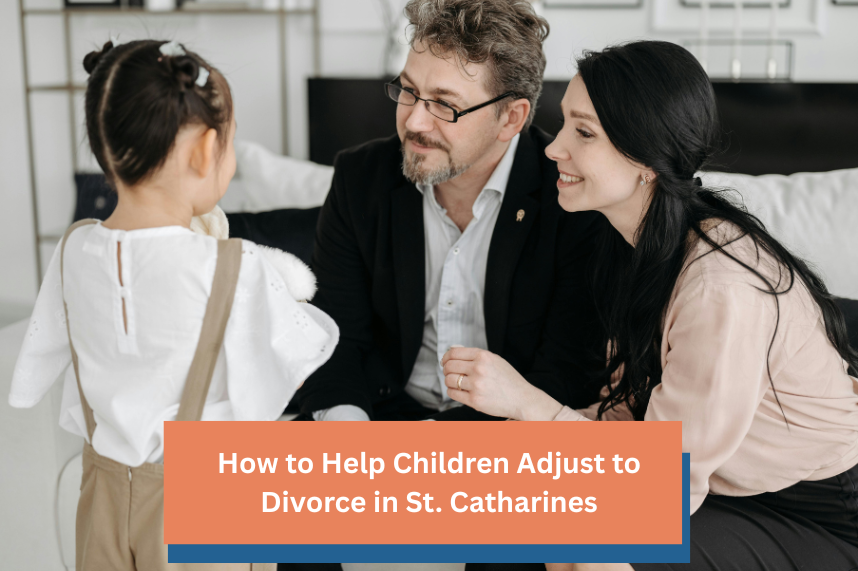
Divorce and separation can create major emotional changes for families, especially for children trying to understand what is happening around them. Parents in St. Catharines often worry about how to explain separation in a way that protects their children emotionally while still being honest about upcoming changes. The words parents choose, the timing of conversations, and the way co-parents work together can all shape how children cope during this transition.
Families across St. Catharines and the Niagara Region face unique emotional, parenting, and legal considerations during separation. While divorce can feel overwhelming, thoughtful communication and child-focused planning can help children feel safe, supported, and reassured. By approaching these conversations carefully and maintaining stability wherever possible, parents can help reduce fear and confusion while building resilience and trust.
Before discussing separation with your children, it is important for both parents to agree on the main information that will be shared. Children often feel more secure when parents provide a consistent message rather than conflicting explanations or uncertain answers.
Children commonly want to know:
Even if every detail has not yet been finalized, preparing together can reduce confusion and anxiety for children. Many separating parents in St. Catharines choose to work with a mediator to create parenting arrangements before having these discussions so they can provide children with clear and reassuring information.
The setting and timing of this conversation can strongly influence how children process the news. Children need reassurance, emotional safety, and calm communication when learning about divorce.
Whenever possible, parents should speak to children together in a quiet and familiar environment. Choosing a time when there are no immediate obligations or stressful events can help children absorb the information more comfortably.
Parents should try to avoid:
Most importantly, children need to hear that they are loved, supported, and not responsible for the separation. Simple, age-appropriate explanations are often the most effective.
Children processing divorce are usually trying to answer three important questions:
Parents should answer honestly while avoiding unnecessary adult details or conflict. Younger children generally need brief and reassuring explanations, while older children and teenagers may ask more complex questions about family dynamics and future plans.
Children benefit from hearing repeated reassurance that the separation is an adult decision and not something they caused.
Every child responds differently to separation depending on their age, personality, and emotional maturity. Tailoring conversations to their developmental stage can help them feel more secure and understood.
At this age, children need clarity, comfort, and consistency. Use short, simple sentences and be ready to repeat explanations often. Focus on reassuring them that their daily routines and the love they receive won’t change.
Examples:
Children in this stage may ask practical questions and try to make sense of the changes. It’s important to offer stability, correct misunderstandings, and emphasize what remains consistent.
Examples:
Older children often seek more autonomy and may have complex emotions. While it’s important to keep them informed and invite input, also respect their need for privacy and emotional space.
Examples:
Children are highly sensitive to their parents’ emotional reactions during separation. Even when emotions are difficult to manage, remaining calm and supportive helps children feel more secure.
Helpful approaches include:
Children do not expect parents to be perfect, but they do benefit from seeing adults handle difficult situations respectfully and calmly.
Separating parents in St. Catharines should understand that parenting decisions in Ontario are based on the best interests of the child. Courts and mediators generally encourage arrangements that support emotional stability, ongoing parental involvement, and healthy co-parenting relationships.
Important topics often include:
Understanding these legal and parenting principles can help parents communicate more clearly and reduce misunderstandings during separation discussions.
Children react to separation in many different ways. Some may become quiet and withdrawn, while others may display frustration, sadness, or anxiety.
Parents can support emotional well-being by:
If children continue struggling emotionally, families may benefit from working with counsellors, child specialists, or family mediators who can help reduce conflict and improve communication.
Children are deeply affected by how parents speak about one another after separation. Negative comments about the other parent can increase emotional stress and create feelings of guilt or confusion.
Helpful co-parenting strategies include:
Children generally adjust better when they feel free to love and maintain relationships with both parents without pressure or conflict.
Children may revisit the reasons for divorce over time. Keep explanations simple and focused on well-being rather than blame.
Example:
“We believe this is the best way for everyone to be happier and healthier.”
Clear routines and expectations help children feel more stable during periods of uncertainty. Children often feel safer when they understand how daily life will continue after separation.
Parents should clearly explain:
Using shared calendars or written parenting schedules can help reduce confusion and improve consistency for children.
Siblings often react differently to divorce, even within the same household. One child may appear emotionally unaffected while another struggles significantly.
Parents should:
Recognizing each child’s unique emotional needs can help parents provide more effective support during separation.
Children sometimes feel uncomfortable discussing divorce with classmates, relatives, or community members. Parents can help children feel more prepared by offering simple and reassuring responses.
Examples may include:
Encouraging children to speak with trusted adults when needed can also help them process emotions more comfortably.
Resource | What It Offers | Who Can Access It |
Free info on the family law process | Anyone involved in family law matters | |
Legal representation for children in disputes | Children involved in court cases | |
Child’s views and preferences. | Parents, lawyers, court professionals | |
Conflict resolution, co-parenting strategy | Separating couples seeking dispute resolution | |
24/7 counselling, youth-specific advice | Children and teens | |
Peer support for children’s grief | Parents/caregivers |
Although divorce creates major life changes, children can adapt successfully when parents prioritize communication, emotional support, and stability. Consistent routines, respectful co-parenting, and open conversations help children feel more secure as families transition into new living arrangements.
Parents do not need to have every answer immediately. What matters most is providing reassurance, maintaining healthy communication, and seeking support when needed. Every calm and supportive conversation helps strengthen a child’s sense of safety and trust during uncertain times.
We proudly support couples and families in St. Catharines including:
Our secure online divorce mediation and family mediation services make it easier for separating couples across St. Catharines and nearby communities to resolve parenting, support, and property issues without unnecessary court conflict.
Divorce mediation provides St. Catharines families with a practical and cost-effective alternative to traditional court proceedings. Whether you are working through parenting arrangements, child support, spousal support, or property division issues, family mediation offers a structured and supportive process focused on cooperation and long-term stability.
🗓️ Schedule your free 30-minute joint consultation to learn how online divorce mediation and family mediation can support your family’s next steps.
📞 Toll-Free: 888-779-8777
📧 connect@positivesolutions.ca
🌐 www.positivesolutions.ca
“Changing the way couples separate in Ontario”

President and founder of Positive Solutions Divorce Services®
(416)-559-5527 | connect@positivesolutions.ca | positivesolutions.ca
The information provided in our blogs and throughout our website is intended for general educational purposes, offering insights into separation and divorce processes in St. Catharines and throughout Ontario. While we make every effort to ensure our content is accurate and current, it should not be considered legal advice. Although we can provide legal information to help you understand the divorce process, we recommend consulting with a qualified family law lawyer to obtain legal advice specific to your situation.
Learn More about Positive Solutions Divorce Services
Book a Free Joint Online Meeting to see if Mediation is right for you.


If a parent fails to comply with the agreed-upon plan, the other parent can seek enforcement through family court or return to mediation to resolve the conflict.

Throughout the mediation process, we encourage open communication and creative problem-solving, often uncovering mutually beneficial solutions. Our goal is to help you create a separation agreement that provides clarity and stability during this transitional period, while also being flexible enough to adapt to future changes.
By choosing our mediation services for your separation agreement, you can often achieve a more personalized and comprehensive document than one created through traditional legal channels, potentially saving time, reducing costs, and laying the groundwork for a more amicable post-separation relationship.
A Separation Agreement is a legally binding document that outlines how separating spouses will divide parenting responsibilities, property, and finances after a relationship ends. At Positive Solutions Divorce Services®, we help couples create clear, enforceable Separation Agreements through mediation—without going to court.
Our trained mediators guide both partners through every topic that matters: parenting time, decision making, child support, spousal support, and property equalization. We offer a calm, structured environment where couples can resolve issues respectfully and affordably. Once decisions are made, we prepare a comprehensive agreement that can be reviewed by independent legal counsel and signed to become legally binding in Ontario.
*The information included in a Separation Agreement, or other applicable documents, is purely a guide and cannot substitute for a lawyer’s skill, knowledge, and careful drafting. These documents are simply reflective of the information received from you and are an administrative service only.
Positive Solutions Divorce Services® does not warrant and is not liable or responsible for ensuring the validity and/or enforceability of any Agreement or clause in an Agreement and remains your full and sole responsibility. Full financial disclosure is a crucial element in the preparation of any Agreement. It is also critical that you understand your rights and obligations under existing law.
In many circumstances, the Agreement will be addressing complex assets and issues, such as corporations, trusts, pensions, tax implications etc. In these cases, it is imperative that the actual relevant documentation be reviewed and that the expertise of an accountant or specialist in the subject area be consulted to ensure that the Agreement properly addresses these complex assets and issues. It is strongly recommended that you retain Independent Legal Advice before signing any documentation arising out of the end of your marriage or common law relationship.
A domestic contract is a legal agreement developed between two individuals—spouses, common-law partners, or couples planning to cohabit—to manage their rights, responsibilities, and expectations during a relationship or after separation. Common types include cohabitation agreements, marriage contracts (prenups), separation agreements, and post-divorce contracts.
These agreements help address important matters such as property division, financial support, and decision-making, setting clear expectations and preventing misunderstandings. They offer stability and peace of mind, particularly for couples entering a long-term partnership, blending families, or protecting assets from a previous marriage. Domestic contracts are legally binding when properly drafted, signed, and executed following Ontario guidelines. Investing in one now can reduce costly legal disputes and emotional stress later, while giving both parties transparency around financial and familial arrangements.
Domestic contracts are highly customizable. Commonly addressed topics include:
We work with you to design an agreement that reflects your specific goals and realities. Our mediators guide both partners through open, respectful discussions to reach outcomes that fit your unique circumstances—whether emphasizing protection, clarity, or flexibility.
To make sure your domestic contract holds up in court, our process deeply focuses on key legal elements:
By following this framework, we help you create a strong, legally valid agreement that stands the test of time—and avoids future challenges around interpretation or legitimacy.
Life is rarely static—and your domestic contract should adapt with you. Whether you get married, have children, or experience a change in income, we can help modify your agreement to suit evolving needs.
Here’s how we guide updates:
This adaptable process empowers you to maintain clarity and fairness as life shifts—while preserving the legal integrity and intent of your original agreement.
By addressing these important legal and financial matters through mediation, couples can reduce conflict, save money, and reach mutually beneficial solutions without going to court.
Throughout the process, we maintain a neutral stance, ensuring that both parties’ voices are heard, and their interests are considered. Our goal is to help you reach a comprehensive separation agreement that addresses all aspects of your separation, while minimizing conflict and preserving important relationships. By choosing our mediation services, you can navigate your separation with greater control, reduced stress, and significant cost savings compared to traditional litigation. Positive Solutions Divorce Services provides professional mediation services to families across Ontario, helping couples in cities like Toronto, Ottawa, Mississauga, and beyond reach fair and amicable agreements.
This approach provides clarity, fairness, and a plan personalized to your family’s needs—without court involvement.